
The Psychology of Brands People Actually Care About
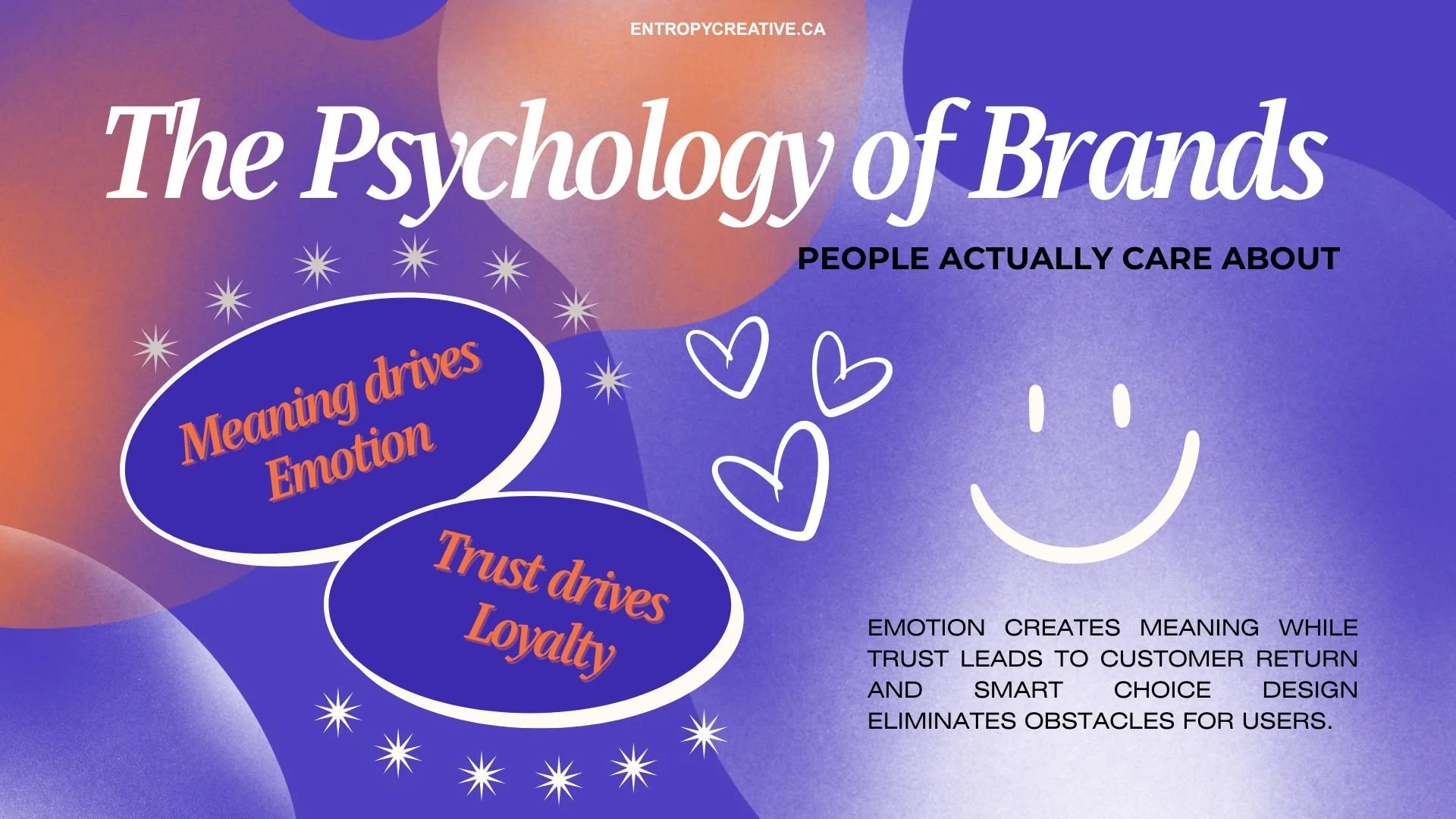
The brand requires psychological treatment instead of paint product status because this method enables loyalty to exist without depending on discounts. The practical stack needs three essential elements which are designing emotional connections (meaning) and building trust (proof) and reducing human barriers (friction). Below, presented with clear goals, concrete moves, visible outcomes, you’ll see how to put this into play for a $500K–$5M company.
1) Emotion: Make meaning first, marketing second
What’s the job of your brand – emotionally? People choose to work with brands because these brands help them experience competence and calmness and visibility and pride and excitement and security. Choose one value to deliver consistently throughout all touchpoints including website promise and packaging and onboarding and support interactions. The combination of distinctive assets including color pairings and metaphors and a sign-off line creates a memorable experience.
Design the “peak” and the “end.” The peak–end rule shows that customers recall their most extreme experience and their last interaction when evaluating their entire experience. Create one outstanding experience through unboxing and onboarding surprises and welcome emails which deliver useful content to guide users toward their next steps. The two beats establish a memory pattern which customers remember and share with others.
Case Snapshot – Dove: Emotion as a platform, not a poster
Context: Dove changed beauty standards through their promotion of self-esteem and their use of actual people instead of anxious beauty standards. See the HBS case overview Dove and Real Beauty: Building a Brand with Purpose.
Moves: Multi-year platform across ads, education, and product storytelling; purpose integrated beyond any single campaign.
Why it works: People form instant emotional connections through their authentic disclosures which become standard practice. The platform strengthened because the exact feeling transmitted through all communication channels beyond headlines.
Founder task (30 min): Create a post which will stay visible at the top of the page for three months to show: “Our brand provides [who] with [feeling] during their [situation] experience.” Next identify two distinctive brand elements which will achieve recognition through continuous use.
2) Trust: Promises kept in public
Trust functions as actual evidence which proves its existence rather than existing as a subjective feeling. The intersection of competence and character and consistency creates this quality. Create measurable promises which demonstrate evidence of risk reduction in critical areas.
Operationalize reliability. Post a response-time SLA and meet it. Publish release notes or “what changed” updates. Put a real human on support. Show pricing logic or packages, not mystery.
Place trust cues where fear spikes. Near pricing: a plain-language guarantee. The system requires users to complete their registration process before they can access the system. The checkout process includes shipping deadlines together with customer service availability times. The onboarding process includes a 10-minute achievement which represents the first success.
Case Snapshot – Patagonia: Values that survive contact with operations
Context: The Black Friday ad Don’t Buy This Jacket revealed how people waste money while showing that the entire system needs to change. The company Patagonia supported this message through its development of Worn Wear which functions as a resale and repair system.
Moves: Operate through two main business segments which include large-scale buy-back and repair operations and a functioning marketplace and it has maintained its commitment to social causes for multiple decades while delivering products that last for many years.
Why it works: The system-based approach of Purpose makes it an authentic and trustworthy organization. The operational systems of the brand align with its message which enables customers to trust the company when it requests them to reduce their consumption.
Case Snapshot – Buffer: Transparency as a trust engine
Context: Buffer has operated with complete transparency since 2013 by showing employee compensation and displaying performance data through their Open dashboard which shows continuous real-time metrics.
Moves: Use a salary formula to establish a salary system and public revenue dashboard and continuous documentation of system development.
Why it works: The approach eliminates information imbalances which benefit service and software as a service businesses while enabling faster decision-making and performance tracking. Show the pattern to your audience even though you won't release salary information because it demonstrates your workflow and performance metrics and version history.
Founder task (45 min): Choose one measurable promise you can keep (e.g., “first draft in 72 hours,” “first booking in 14 days”). Place the content at the top of the homepage with a single proof point which can be a mini case study or metric or timestamped changelog. The pricing section needs to include a standard guarantee option for customers.
3) Human behavior: Make the right action the easy action
The environment undeniably matters even considering the presence of trust or emotional bonds between people. The design of choice systems operates as either a supportive system which enables people to move forward or an obstructive system which hinders their progress.
Reduce steps, not just clicks. Map discover → decide → commit → onboard. The system should eliminate all non-essential fields and choices because they do not affect the final results. Rule: one screen, one decision. If you need more than three decisions before value, cut.
Defaults – used ethically. Choose the option which leads to the highest success rate for most customers. Auto-save progress. Offer a recommended path. People have limited willpower so defaults serve as a solution.
Kill anxious moments. Place microcopy where uncertainty spikes: time (“Takes 4 minutes”), risk (“Cancel anytime”), competence (“We’ll import it for you”). Offer a safe trial: Preview without publishing or Try with a sample dataset.
The system needs to show microcopy to users when they doubt their actions during specific situations. The system shows users three different types of information through specific points in time which include time ("Takes 4 minutes") and risk ("Cancel anytime") and competence ("We’ll import it for you"). The system requires a protected testing environment which enables users to access content before release and perform tests using dummy data.
Case Snapshot – Dropbox: Reward behavior that creates value
Context: Dropbox established an incentive system which rewarded users for sharing the product through extra storage benefits for both themselves and their invited friends.
Moves: A dual-sided referral system which operates as a loop while users earn storage progress through their activities and sharing becomes effortless.
Why it works: It incentivized the exact behavior that improves the product experience (shared files/folders). The initial findings from the analysis show that the platform expanded from 100K to 4M users during a 15-month period while referral activities generated 35% of new daily users and users sent out 2.8M invites during one month (e.g., this breakdown of the legendary Dropbox referral program and mainstream rundowns like Entrepreneur). The lesson teaches us to reward actions which boost customer success instead of focusing on empty invitation metrics.
Founder task (60 min): Identify your “first win” and design: the smallest meaningful outcome a new customer can feel in ≤10 minutes (product) or ≤1 business day (service). Make that path the default. Create a reward system which honors staff members who achieve better customer referral results.
Actionable Takeaway (do this this week)
Define the feeling. Write: “We help [who] feel [feeling] when they [situation].” Put it atop your website/creative briefs for 90 days. Pressure-test decisions against it.
Name and prove one promise. Add a homepage section that includes a measurable claim together with one proof point using metrics or mini case studies or public changelog entries. Patagonia and Buffer demonstrate through their approaches that message + mechanism creates trust between organizations and their customers.
Shorten the first win. Collapse your path to value to 3 or fewer decisions. The system should include microcopy messages which appear during times of user anxiety about time or risk or seeking help.
Tune defaults. Pre-select the option you’d recommend to a close friend. If it’s not in their best interest, don’t default it.
Add one compounding loop. If a referral or share improves outcomes, reward it – lightly. The incentives at Dropbox show that rewards which match the actual value people create lead to maximum effectiveness.
Ready to scale smarter?